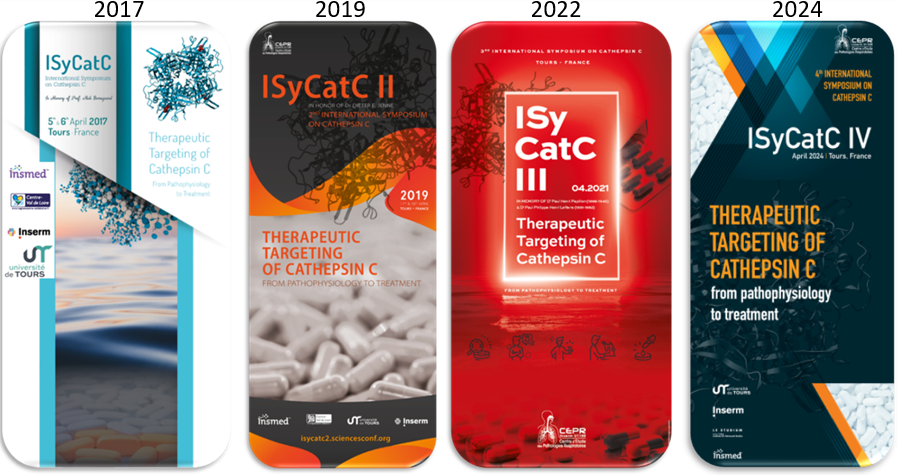
The International Symposium ISyCatC V
Cathepsin C: Advances in Therapeutic Targeting and the 10-Year Journey of the IcatCC Consortium
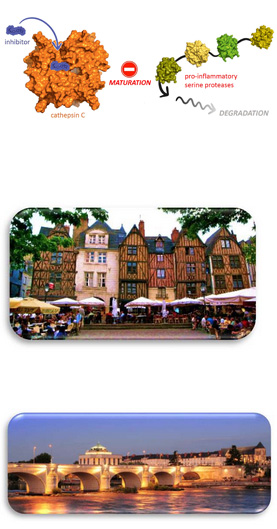
Cathepsin C, also known as dipeptidyl peptidase 1 (DPP1), is attracting increasing attention from both scientists and clinicians due to its central role in activating proinflammatory neutrophil serine proteases (NSPs; elastase, proteinase 3, cathepsin G, and NSP‑4), which are implicated in various chronic inflammatory/autoimmune diseases and certain cancers. Promising preclinical and clinical data suggest that pharmacological inhibition of neutrophil serine proteases may help ameliorate these conditions. Patients with Papillon‑Lefèvre syndrome have a genetically determined deficiency in cathepsin C but, reassuringly, do not exhibit significant immunodeficiency despite the absence of neutrophil serine proteases in immune cells.Thus, pharmacological control of cathepsin C activity in bone marrow precursor cells represents a promising therapeutic strategy for NSP‑mediated disorders, including chronic obstructive pulmonary disease (COPD), bronchiectasis, T2‑low asthma, cystic fibrosis, ANCA‑associated vasculitis, pulmonary arterial hypertension, inflammatory bowel diseases, and rheumatoid arthritis. Chronic inflammatory respiratory diseases affect over 1 billion people worldwide and are responsible for approximately 4 million deaths annually, with mortality expected to increase through 2030, particularly due to COPD.
Several cathepsin C inhibitors have been developed by pharmaceutical companies and academic teams and are currently being evaluated in preclinical and clinical studies. Among the most advanced is brensocatib (Brinsupri), an oral cathepsin C inhibitor. Results from the Phase 3 ASPEN trial in patients with non‑cystic fibrosis bronchiectasis showed significant efficacy, and the drug has now been approved in the USA and EU, making it the first validated targeted treatment for this disease. Two other inhibitors, verducatib and HSK31858, are currently in Phase 3 trials, both demonstrating efficacy and a good safety profile in earlier Phase 2 studies in adults with non‑cystic fibrosis bronchiectasis.
The validation of clinically effective cathepsin C inhibitors represents a major breakthrough. This progress is highly encouraging for the scientific community—biochemists studying cathepsin C functionality, cell biologists investigating its maturation and tissue localization, chemists developing selective inhibitors, and clinicians managing NSP‑mediated disorders. Reducing constitutively produced neutrophil serine proteases via pharmacological cathepsin C inhibition holds great promise for future therapies. It is gratifying to see that the sustained efforts of academic laboratories, industry, and patient advocacy in the field of cathepsin C may now lead to tangible clinical benefits.
From the perspective of unmet medical needs, drug repurposing for rare diseases offers an important opportunity, as more than 95 % of the >7,000 rare diseases lack an approved therapy. Drug repositioning remains particularly attractive for rare diseases for both scientific and commercial reasons. A special issue on “Neutrophil serine proteases and cathepsin C in rare diseases” was published following the 3rd International Symposium on Cathepsin C (ISyCatC III, Tours/France, April 2022).
In 2016, we initiated the International Cathepsin C Consortium (IcatCC) to promote collaborative research on therapeutic co-targeting of cathepsin C. The 2026 symposium marks the 10th anniversary of the consortium, celebrating a decade of joint progress in understanding and targeting this key enzyme. We sincerely thank all the academic and industry researchers involved in the consortium for their dedication, as well as the organizations providing financial and institutional support, which have been essential to advancing research on cathepsin C over the past decade.
Since its creation, the consortium has successfully organized four International Cathepsin C Symposia, bringing together scientists, clinicians, and industry partners from around the world to share knowledge, foster collaborations, and advance the field. This 2026 symposium will be the fifth edition, and it is with great joy and pride that we celebrate ten years of scientific progress, discovery, and partnership. We look forward to inspiring discussions, new ideas, and continued collaboration that will further accelerate the development of therapies targeting cathepsin C for patients in need.
Brice KORKMAZ
On behalf of Scientific Committee
Kingwell K. Neutrophil‑targeting drug seeks first approval in an inflammatory lung disease. Nat Rev Drug Discov. 2025;24(7):487–489.
Chalmers JD, et al. Phase 3 trial of the DPP‑1 inhibitor brensocatib in bronchiectasis. N Engl J Med. 2025;392:1569–1581.
Zhong NS, et al. Effects of the DPP‑1 inhibitor HSK31858 in adults with bronchiectasis (SAVE‑BE): Phase 2 randomized trial. Lancet Respir Med. 2025;13:414–424.
Chalmers JD, et al. Cathepsin C (DPP‑1) inhibition in adults with bronchiectasis: AIRLEAF Phase 2 Study. Eur Respir J. 2025;65:2401551.